
Permanent resident card renewal is the process of replacing an expired or soon-to-expire green card so that you maintain valid proof of your lawful permanent resident status in the United States. Your underlying status does not expire when the card does, but an expired card creates real, practical problems with employment, travel, and re-entry.
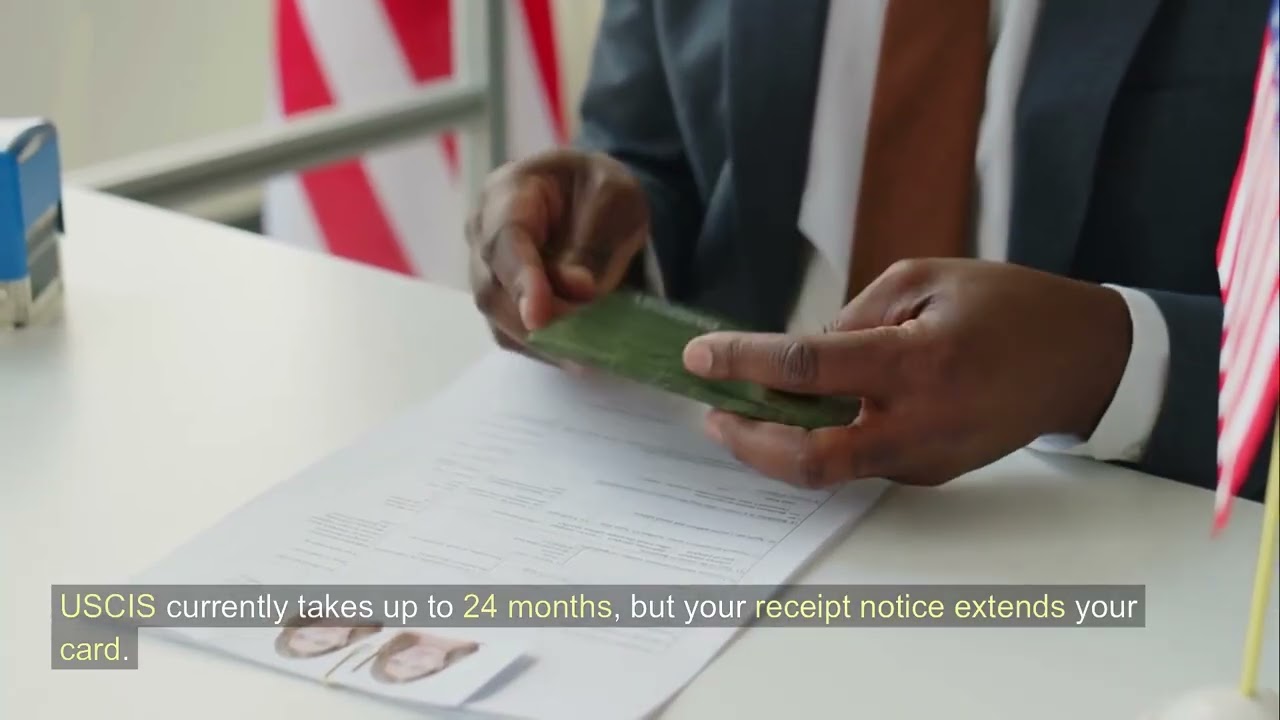
This guide focuses specifically on green card holders facing expiration, helping you understand your timeline, your options, and the steps to protect your status without unnecessary stress.
Here’s what surprises a lot of people: your permanent resident status itself does not disappear when your green card hits its expiration date. The card expires. Your status does not. But try explaining that to an airline gate agent, an employer running an I-9 verification, or a border officer when you’re trying to re-enter the country. An expired card causes real headaches fast. The most common mistake we see is people waiting until the card is already expired before taking action, which limits options and creates unnecessary urgency.
Permanent Resident Card Definition: A Form I-551, commonly called a green card, is the official document proving lawful permanent resident (LPR) status in the U.S., typically valid for 10 years for most holders and 2 years for conditional residents.
How Much Time Do You Actually Have?
According to U.S. Citizenship and Immigration Services (USCIS), you should file Form I-90 (Application to Replace Permanent Resident Card) up to 6 months before your card’s expiration date. That window matters.
USCIS processing times for I-90 filings as of early 2025 average between 8 and 24 months depending on the service center and your individual case. That gap between “card expires” and “new card arrives” is exactly why filing early is non-negotiable.
Conditional resident card (2-year card): You must file Form I-751 (Petition to Remove Conditions) within the 90-day window before your card expires. Missing this window can trigger removal proceedings.
Standard 10-year card: File Form I-90 starting 6 months before expiration. Once filed, USCIS issues a receipt notice that temporarily extends your card’s validity for 24 months. Keep that receipt with your expired card at all times.
Renewing vs. Replacing: Which Process Applies to You
| Situation | Form to File | Typical Fee (2025) | Processing Time |
|---|---|---|---|
| 10-year card expiring | I-90 | $415 filing + $85 biometrics | 8-24 months |
| 2-year conditional card expiring | I-751 | $595 filing + $85 biometrics | 24-36 months |
| Card lost or stolen | I-90 | $415 filing + $85 biometrics | 8-24 months |
| Name or biographic change | I-90 | $415 filing + $85 biometrics | 8-24 months |
Fees current as of 2025. USCIS fee schedules can change – verify at uscis.gov before filing.
Renewing Your Card vs. Applying for Citizenship: What Most People Don’t Consider
Where renewing your green card succeeds: It’s straightforward, maintains your current status, requires no English test or civics exam, and is the right move if you’re not yet eligible for naturalization or don’t want to pursue it.
Where renewing your green card falls short: It costs money and time without expanding your rights. You’ll renew again in 10 years. You can still be deported under certain conditions. International travel remains more complicated than for U.S. citizens.
Where applying for citizenship succeeds: Permanent solution – no more renewals. You get a U.S. passport, full voting rights, and broader family petition options. If you’ve held LPR status for 5 years (or 3 years if married to a U.S. citizen) and meet residence requirements, it may be worth exploring.
Where applying for citizenship falls short: Requires passing English and civics tests, meeting continuous residence requirements, and disclosing any criminal history. Processing can take 18-24 months in 2025.
The verdict: If you’re within 1-2 years of naturalization eligibility, talk to an attorney before automatically renewing. You may benefit more from starting the citizenship process than paying for a renewal that becomes unnecessary within a year.
Thinking about this for your situation? Let’s talk. We’ll walk you through your options – no pressure. Contact us for a straightforward conversation about what makes sense for your case.
Your Green Card Renewal Action Plan
- Step 1 – Check your expiration date: Look at the front of your card. If it expires within 6 months, start your I-90 today. If you have a 2-year card, confirm whether you’re in the 90-day I-751 window.
- Step 2 – Gather your documents: You’ll need your current or expired green card, a copy of your passport, two passport-style photos, and any legal name change documents if applicable.
- Step 3 – Complete Form I-90 or I-751: File online at uscis.gov or by mail. Online filing is faster and provides instant confirmation. Double-check every field – errors cause delays.
- Step 4 – Pay the filing fee: $415 for I-90 plus $85 biometrics ($500 total, 2025 rates). Fee waivers are available in limited circumstances.
- Step 5 – Attend your biometrics appointment: USCIS will schedule this at a local Application Support Center. Bring your receipt notice and photo ID.
- Step 6 – Keep your receipt notice safe: This document extends your card’s validity by 24 months. Employers must accept it with your expired card for I-9 verification purposes.
Documents You’ll Need – Renewal Checklist
- ☐ Current or most recent green card (front and back copy)
- ☐ Valid passport or government-issued photo ID
- ☐ Two color passport photos (2×2 inches)
- ☐ Court order or certificate for legal name changes
- ☐ Any prior I-90 receipt notices if replacing a lost card
- ☐ Payment method for USCIS fees
- ☐ Marriage certificate if your card reflects a prior name
Common Mistakes That Delay or Derail Renewals
The most common mistake we see is waiting too long. Filing after expiration means you’re already in violation of the requirement to carry valid proof of status. Beyond timing, here are three other frequent problems:
- Wrong form or wrong version: USCIS updates form versions regularly. An outdated form version will be rejected outright. Always download forms directly from uscis.gov on the day you file.
- Missing signatures or incomplete fields: A single blank field can delay processing by months. Review every section before submitting.
- Traveling internationally while renewal is pending: Your receipt notice may not be sufficient for re-entry in all situations. Talk to an immigration attorney before booking international travel during a pending I-90 or I-751.
Key Takeaways for Green Card Holders in 2025
- Your status does not expire – your card does. But an expired card creates immediate practical problems with employment and travel.
- File 6 months before expiration for standard 10-year cards. For 2-year conditional cards, file within the 90-day window.
- Your USCIS receipt notice extends your card’s validity by 24 months – carry it with your expired card at all times.
- Naturalization may be worth considering if you’re approaching eligibility, potentially making a renewal unnecessary.
- Errors on your application cause significant delays – get it right the first time.
Frequently Asked Questions
What happens if my green card expires before I file for renewal?
Your permanent resident status remains intact even after your card expires, but you lose valid proof of that status. This affects your ability to work legally, travel internationally, and re-enter the U.S. File Form I-90 as soon as possible if your card has already expired.
Can I travel outside the United States with an expired green card?
Traveling internationally with an expired green card is risky and generally not advisable. You may face difficulty boarding your flight or re-entering the U.S. If travel is unavoidable, consult an immigration attorney before you go.
How long does green card renewal take in 2025?
Current USCIS processing times for Form I-90 range from 8 to 24 months as of early 2025. Filing early and keeping your receipt notice solves the gap – that notice extends your card’s validity while you wait.
What is a 2-year green card and why does it need different handling?
A 2-year conditional green card is issued to new permanent residents who obtained status through marriage or certain investment petitions. You must file Form I-751 to remove the conditions within the 90-day window before expiration – missing this window can result in removal proceedings.
Can my employer terminate me because my green card expired?
A pending I-90 with a valid receipt notice serves as acceptable I-9 documentation, and employers must accept it. If an employer terminates you solely because your card is expired while a renewal is pending, consult an employment attorney – this may constitute employment discrimination.
Should I renew my green card or apply for citizenship instead?
If you are within 1-2 years of meeting naturalization eligibility requirements, applying for citizenship may make more sense than paying to renew. Naturalization eliminates the need for future renewals entirely. Speak with an immigration attorney to evaluate your specific eligibility.
What This Means for You – Your Next Step
Residents across Hudson County, Bergen County, Essex County, Union County, Passaic County, and throughout northern New Jersey navigate these exact questions every day. The process is manageable when you start early and file correctly. Waiting is where people get into trouble.
At Tourzani & Long, LLC, based in North Bergen, NJ, the team works with permanent residents throughout New Jersey on immigration matters. If your card is expiring, if you’ve already missed the window, or if you’re weighing renewal against naturalization, getting clear guidance now prevents much bigger problems later.
Ready to take the next step? Contact us today for straight answers about your specific situation. For a full overview of how the team can help, visit our services page. Don’t let a paperwork deadline put your life in the U.S. on hold.