
A USCIS Request for Evidence (RFE) is an official notice from U.S. Citizenship and Immigration Services asking an applicant to submit additional documentation or clarification before a decision is made on their case. Receiving one does not mean your application has been denied, but it does mean the stakes just got higher.
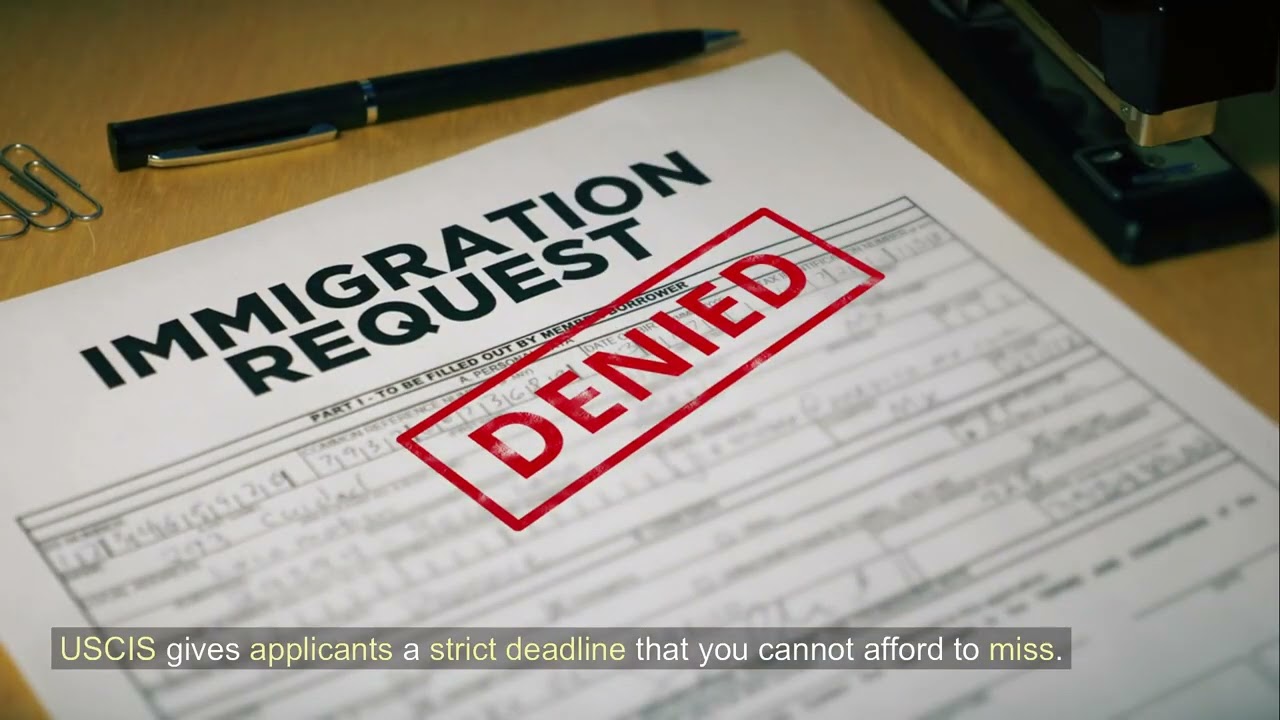
This guide focuses specifically on what a USCIS RFE means for applicants in New Jersey, what triggers one, and how to build a response that actually works.
Getting that envelope in the mail can feel like the floor dropping out from under you. You filed everything you thought you needed. You waited months. And now USCIS wants more. The most common mistake people make at this stage is either panicking and responding too quickly, or waiting too long and missing the deadline entirely. Neither ends well.
What a USCIS Request for Evidence Actually Means
Request for Evidence definition: A formal USCIS notice, typically issued mid-adjudication, that identifies missing, insufficient, or conflicting information in a pending immigration petition or application.
An RFE is not a denial. It is an opportunity. USCIS is telling you exactly what they need to approve your case. But that opportunity has a hard deadline, usually 87 days from the date on the notice, and the quality of your response determines whether your application moves forward or gets denied outright.
According to U.S. Citizenship and Immigration Services, RFE response rates and approval outcomes vary significantly by case type and the completeness of the initial filing. Incomplete or poorly organized RFE responses can put an otherwise approvable case at serious risk of denial in both family-based and employment-based petitions.
Why USCIS Issues a Request for Evidence
There are several common triggers. USCIS may feel your initial petition lacked sufficient proof of eligibility, or that the documents submitted raised more questions than they answered. Here are the most frequent reasons:
- Insufficient proof of a qualifying relationship (marriage, employer-employee, etc.)
- Missing financial documentation or an incomplete Affidavit of Support
- Discrepancies between information in the petition and supporting documents
- Lack of evidence that an employer meets petition requirements
- Medical or criminal history records that need clarification
The pattern we see most often is applicants who submit technically complete forms but leave the evidentiary gaps USCIS officers notice immediately. A form can be filled out perfectly and still trigger an RFE if the supporting documents do not clearly tell the right story.
Thinking about your RFE and not sure where to start? Contact us for a straightforward conversation about your options. No pressure, just clarity.
Responding Without Help vs. Working With an Attorney: A Real Comparison
Self-Response vs. Attorney-Assisted Response: Which Approach Works?
| Factor | Self-Response | Attorney-Assisted Response |
|---|---|---|
| Cost | $0 in legal fees | Varies by case complexity (2025 market rates) |
| Risk Level | High – easy to miss what USCIS is really asking | Lower – trained eye identifies hidden issues |
| Document Strategy | Often reactive, not strategic | Organized to directly address each RFE point |
| Deadline Management | Easy to miscalculate | Tracked with built-in buffer time |
| Best For | Very simple, low-stakes cases | Most RFE situations, especially complex ones |
Where self-response succeeds: It costs nothing in legal fees. For a straightforward document request with clear instructions, organized applicants can gather and submit what is needed.
Where self-response fails: Most applicants underestimate what USCIS is actually asking. An RFE often involves legal interpretation, not just paperwork collection. Submitting the wrong documents or framing evidence incorrectly can result in denial even when the underlying case is approvable.
Where attorney-assisted response succeeds: A trained eye reads the RFE differently. Attorneys identify what USCIS is signaling beyond the literal request, organize a legally coherent response, and draft a cover letter that ties everything together.
Where attorney-assisted response fails: Cost can be a barrier. And not every attorney has handled your specific case type.
The verdict: For most RFE situations, especially those involving relationship evidence, employment eligibility, or any case with prior complications, attorney assistance produces meaningfully better outcomes. The cost of a denial and refiling almost always exceeds the cost of professional help upfront.
Your USCIS RFE Response Action Plan
- Step 1 – Read the RFE in full, twice: Note the exact deadline date and every item USCIS lists. Missing even one element means a likely denial.
- Step 2 – Organize requested evidence by category: Group documents by each RFE point so your response directly mirrors USCIS’s questions.
- Step 3 – Gather new and existing documents: Pull financial records, relationship evidence, employment verification, or whatever your specific RFE requires.
- Step 4 – Draft a detailed cover letter: Address each RFE point explicitly. A cover letter that summarizes and guides the officer through your evidence package significantly improves your response.
- Step 5 – Review for completeness before mailing: Confirm every document is included, translated if needed, and that your cover letter matches what is in the package.
- Step 6 – Send with tracking and retain copies: Use USPS certified mail or a courier with tracking. Keep copies of everything you submit.
Common RFE Response Mistakes That Cause Denials
The most common mistake we see is treating an RFE like a simple document request. It is not. Each point in the notice signals a specific legal concern. Here are the errors that lead to preventable denials:
- Submitting documents that are not specifically responsive to what USCIS asked
- Missing the deadline or miscalculating it from the wrong date
- Leaving out a cover letter that ties the evidence to each RFE point
- Submitting untranslated foreign-language documents
- Failing to address every single item listed in the RFE
Applicants across New Jersey, Hudson County, Bergen County, and the broader metro area make these mistakes every month, not because they are careless, but because immigration paperwork genuinely demands a level of precision most people have never had to apply before.
See how working with Tourzani & Long, LLC compares for your situation. Visit our services page to get a full picture of how we approach cases like yours.
Key Takeaways for New Jersey Applicants in 2025
- An RFE is not a denial – it is a second chance that requires a precise, complete response
- The deadline is strict – typically 87 days, and USCIS grants very few extensions
- Every RFE point must be addressed – partial responses lead to partial or full denials
- Cover letters matter – a well-organized response package with a clear cover letter outperforms a document dump every time
- Professional guidance reduces risk – especially for cases involving prior denials, complex relationships, or employment eligibility
Frequently Asked Questions
What is a USCIS Request for Evidence?
A USCIS Request for Evidence is a formal notice asking an applicant to provide additional documentation or clarification before a final decision is made. It does not mean your application has been denied. It means USCIS needs more information to approve it.
How long do I have to respond to a USCIS RFE?
USCIS typically gives applicants 87 days from the date printed on the RFE notice to submit a complete response. Missing this deadline almost always results in denial without further review.
What happens if I do not respond to an RFE?
If you do not respond to an RFE by the deadline, USCIS will deny your application based on the record as submitted. In most cases, you would need to refile and pay all fees again from the beginning.
Can I respond to a USCIS RFE without an attorney?
Yes, you can respond without an attorney, but the risk of an incomplete or misdirected response is significant. Cases involving complex evidence, prior issues, or multiple RFE points benefit considerably from legal guidance.
How much does it cost to respond to an RFE?
There is no USCIS filing fee to submit an RFE response, but attorney fees for drafting and organizing the response vary based on case complexity. General market rates in 2025 for RFE response assistance range from $500 to $2,500 depending on the case type and documentation volume.
Does getting an RFE mean my case will be denied?
No, receiving an RFE does not mean your case will be denied. Many cases that receive RFEs are ultimately approved when the response is thorough and directly addresses every concern USCIS raised.
Where does Tourzani & Long, LLC serve clients?
Tourzani & Long, LLC is based in North Bergen, NJ and serves clients throughout Hudson County, Bergen County, Essex County, and surrounding communities in northern New Jersey. The firm also works with clients in the greater New York metro area.
Your Next Step Starts Here
An RFE is time-sensitive. Every day you wait is a day closer to that deadline. If you have received a Request for Evidence from USCIS and you are not sure how to respond, do not guess. The cost of a wrong response is far greater than the cost of getting it right the first time.
Ready to move forward with a clear plan? Contact Tourzani & Long, LLC today. We will review your RFE, explain exactly what USCIS is asking, and help you build a response built to hold up under scrutiny. Reach out now because your response window is already counting down.
Disclaimer: This content is for general informational purposes only and does not constitute legal advice. Reading this content does not create an attorney-client relationship. Consult a qualified immigration attorney regarding your specific situation.