Reviewed by Siavash Tourzani, Esq., Founder
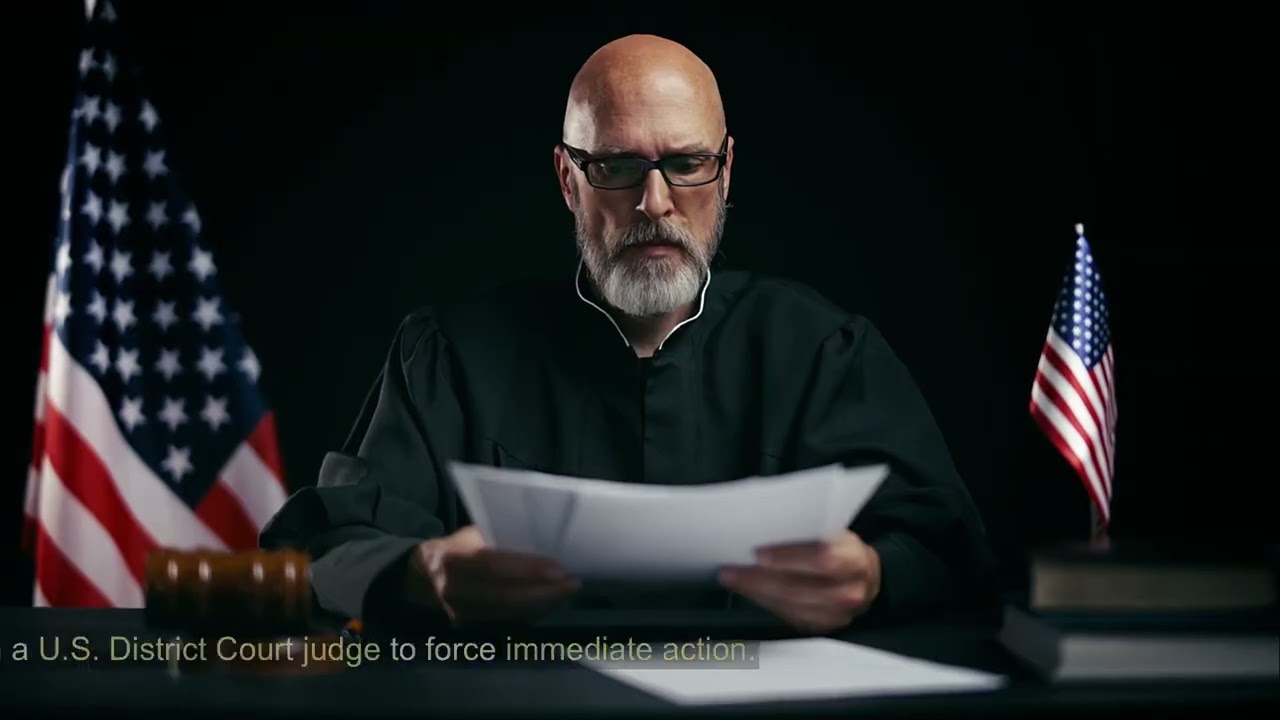
Suing USCIS for unreasonable delay is a legal remedy available to applicants whose naturalization cases remain unresolved well beyond standard processing times, particularly after a completed interview. This option exists because federal law gives USCIS a specific window to act, and when that window closes without a decision, you have the right to ask a federal court to intervene.
This guide focuses specifically on naturalization applicants who have already completed their citizenship interview and are waiting, sometimes for months or longer, for a decision that never comes.

Why Citizenship Cases Get Stuck After the Interview
The interview is supposed to be one of the final steps before approval or denial. But thousands of applicants across New Jersey and the broader tri-state area sit in limbo after completing it successfully. USCIS may flag your case for an FBI name check, a background investigation, or an internal review that nobody explains to you.
Common reasons cases stall include pending background checks, holds related to prior immigration history, database discrepancies, or simply an overloaded field office. The Newark USCIS Field Office, which handles cases from Hudson County and surrounding areas, has at times carried significant backlogs.
Waiting is frustrating. But there is a legal mechanism built into federal law that gives you a real option when the wait becomes unreasonable.
The 120-Day Rule: Your Legal Trigger for Suing USCIS
Under federal immigration law (8 U.S.C. § 1447(b)), if USCIS fails to make a decision on your naturalization application within 120 days of your initial examination (your interview), you have the legal right to file a lawsuit in U.S. District Court.
120-Day Rule: The statutory deadline that starts on the date of your naturalization interview, after which you may petition a federal court to either decide your case directly or order USCIS to issue a decision.
This is not a threat or a bluff. It is a legitimate legal pathway. Federal courts can either take jurisdiction and decide the case themselves or remand it to USCIS with a firm deadline. Either outcome breaks the logjam.
Mandamus lawsuits filed under this statute can be an effective tool for prompting USCIS to act, and many immigration practitioners use this approach when agency delays become unreasonable.
Thinking about whether this applies to your situation? Let’s talk. The team at Tourzani & Long, LLC offers consultations for citizenship and family-based cases. We’ll walk you through your options with no pressure.
Mandamus vs. Writ of Mandamus: Understanding Your Federal Court Options
Where the 120-day lawsuit succeeds: It works when your interview is complete, no decision has been issued, and USCIS cannot point to a legitimate legal reason for the delay. Courts take these cases seriously and routinely order action.
Where the 120-day lawsuit has limits: If USCIS argues your background check is still pending and can show active investigation, some courts allow more time. And if there are substantive issues with your application, a court decision may not go your way.
Where mandamus petitions succeed: A broader writ of mandamus under 28 U.S.C. § 1361 can be used for delays outside the 120-day naturalization window, for example if USCIS refuses to schedule your interview at all. Courts can compel agency action when a clear legal duty is being ignored.
Where mandamus petitions have limits: They require showing a clear right to the action, a clear duty by USCIS to perform it, and no other adequate remedy. These cases take careful framing.
The verdict: For post-interview delays past 120 days, the § 1447(b) petition is your sharpest tool. For pre-interview delays or other stuck cases, mandamus is still a viable path but requires stronger legal analysis upfront.
Legal OptionStatuteWhen It AppliesTypical Outcome§ 1447(b) Petition8 U.S.C. § 1447(b)120+ days post-interviewCourt decides or orders USCIS to actMandamus Action28 U.S.C. § 1361Any unreasonable agency delayCourt compels agency actionAPA Claim5 U.S.C. § 706Unreasonable delay, broader contextAgency ordered to act within set time
Your Citizenship Delay Action Plan
- Step 1 – Confirm your interview date: Pull your interview notice and calculate whether 120 days have passed. This is your legal starting point.
- Step 2 – Submit a case inquiry: Use the USCIS online case status tool and submit an e-request or contact the USCIS Contact Center. Document every response.
- Step 3 – Request a congressional inquiry: Contact your U.S. Representative or Senator’s office and ask them to submit a congressional inquiry on your behalf. This sometimes prompts USCIS to act.
- Step 4 – Consult an immigration attorney: If none of the above produce results after 120 days, get legal advice on filing a § 1447(b) petition in federal court.
- Step 5 – File in U.S. District Court: Your attorney will file a complaint naming USCIS and the relevant officers as defendants. Filing can prompt USCIS to act and move the case toward resolution.
Documents to Gather Before Filing
- ☐ Copy of your Form N-400 application
- ☐ Interview appointment notice (showing date of examination)
- ☐ Any USCIS correspondence received after the interview
- ☐ Case inquiry receipts and written responses
- ☐ Congressional inquiry confirmation if submitted
- ☐ Proof of continuous residence and physical presence
- ☐ Copy of your green card and any prior immigration documents
Common Mistakes That Can Hurt Your Case
The most common mistake applicants make is waiting too long without documentation. Every inquiry you make and every non-response you receive becomes evidence of unreasonable delay. Applicants who keep no records often struggle to build a strong court filing.
- Failing to submit a written case inquiry before filing suit (some courts expect you to try first)
- Counting the wrong date as the interview date (the date of the formal examination matters, not a biometrics appointment)
- Assuming the case will resolve on its own if you wait just a little longer
- Filing in the wrong federal district court
Recent shifts in 2026 USCIS processing show that field offices are under pressure to reduce backlogs, but individual cases still fall through. Staying proactive and legally informed is your best protection.
Key Takeaways for Naturalization Applicants
- The 120-day clock starts on your interview date – not when you submitted your application
- Federal law gives you the right to sue USCIS once that window passes without a decision
- Document everything – every inquiry, every response, every date matters in court
- Congressional inquiries are free and sometimes effective – try them before filing suit
- An immigration attorney can file a § 1447(b) petition that often resolves the case within weeks
Frequently Asked Questions
How long can USCIS legally delay a citizenship decision after the interview?
USCIS has 120 days from the date of your naturalization interview to issue a decision before you can take legal action. After that point, you may file a petition in U.S. District Court under 8 U.S.C. § 1447(b) to compel a resolution.
What happens when you sue USCIS for a citizenship delay?
When you file a § 1447(b) petition, the court can either decide your naturalization case directly or order USCIS to issue a decision within a set timeframe. Many cases settle after filing, with USCIS acting to avoid court proceedings once a complaint is submitted.
Can a background check justify an indefinite delay?
No federal court has held that an indefinite background check justifies unlimited delay in a naturalization case. Courts have consistently ruled that even pending investigations do not excuse USCIS from its statutory obligations indefinitely.
How much does it cost to sue USCIS for a citizenship delay?
Filing a federal lawsuit involves court filing fees and attorney fees, which vary depending on the complexity of your case. Attorney fees for mandamus and § 1447(b) cases are generally billed at an hourly rate or a flat fee, and some attorneys offer payment plans. Industry rates for these filings typically range from $2,500 to $6,000 nationally (2026).
Does a congressional inquiry actually work?
Congressional inquiries are free, require no legal filing, and sometimes prompt USCIS to move a case forward. They are worth attempting before filing suit, but they carry no legal enforcement power and do not always produce results.
Can Tourzani & Long, LLC help if my case is stuck in another state?
Tourzani & Long, LLC is licensed in New Jersey, New York, Massachusetts, and Florida, and handles federal immigration matters across a broad service radius. Federal cases, including § 1447(b) petitions, are filed in federal district court and do not require state-specific licensing in the same way. Contact the firm to discuss your situation.
Your Next Step Starts Here
A citizenship case stuck after a completed interview is not just frustrating. It may already be past the legal threshold that gives you the right to act. The attorneys at Tourzani & Long, LLC serve clients throughout North Bergen, Hudson County, and across the tri-state area, and offer consultations for naturalization and family-based cases.
Ready to stop waiting and get real answers? Contact us today. We’ll review your timeline, explain your federal court options, and tell you directly whether you have a viable case. Time matters here, and the sooner you act after 120 days, the cleaner your legal position becomes.
Explore our Practice Areas or learn more about our team on our About page.
This content is for general informational purposes only and does not constitute legal advice. No attorney-client relationship is formed by reading this article. Please consult a licensed immigration attorney for advice specific to your situation.
About the Author
The Tourzani & Long, LLC Team is an immigration law firm based in North Bergen, NJ, focused on removal defense, family-based petitions, and naturalization. The firm is licensed in New Jersey, New York, Massachusetts, and Florida. For more information, visit our About page.